 Ο οργανισμός
 Διοικητικό συμβούλιο
 Γενικά
 Αποχέτευση
 Ύδρευση
 Αδειοδότηση
 Πράσινα σημεία
 Λογαριασμοί
 Τέλη
Τέλη Υπηρεσίες και τμήματα
 Πληροφορίες/Διαδικασίες
 Ανακοινώσεις
 Προκηρύξεις
 Έργα
Έργα Μετεωρολογική Ενημέρωση
 Άλλα
Άλλα Ύδρευση
 Αποχέτευση
 Αδειοδότηση
 Άλλα έντυπα
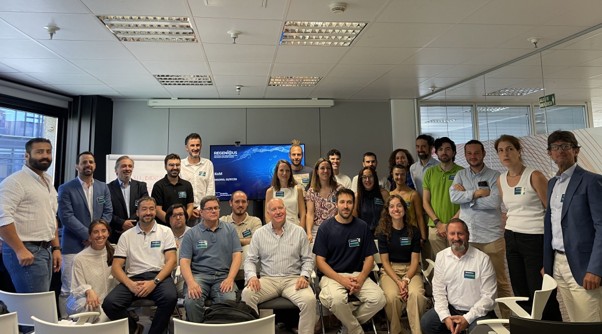

On 2 July, the REGENIOUS (REthinking the ReGENeration of spent granular activated carbon) project officially launched with its kick-off meeting in Madrid, Spain. The project aims to revolutionise the regeneration of spent granular activated carbon, a key material used in industrial and municipal water treatment, by replacing conventional fossil fuel-based thermal regeneration with a novel electrochemical regeneration technology.
Over the next 48 months, REGENIOUS will develop the first-of-a-kind portable and modular electrochemical regeneration plant, capable of operating directly at end-user facilities and enabling the on-site regeneration of spent activated carbon. Demonstration campaigns will take place at drinking water treatment plants in Spain and wastewater treatment plants in Cyprus to validate the technology under real operating conditions. Replication activities will also be carried out in Germany and Portugal to support its wider adoption across Europe.
Coordinated by ENVIROHEMP, the project brings together a multidisciplinary consortium of 16 partners from across Europe, including water utilities, research centres, universities, technology providers, standardisation bodies and innovation organisations. The consortium comprises Consorcio de Aguas Bilbao Bizkaia, Eparchiakos Organismos Aftodioikisis Larnakas, Aigües de Barcelona, Canal de Isabel II, Extraco Construccions e Proxectos, ASCA, Universitat Autònoma de Barcelona, Fundación GAIKER, Central Metallurgical Research and Development Institute, CETAQUA, Asociación Española de Normalización (UNE), Contactica, C4G, Waterloop Solutions and Water Europe.
The REGENIOUS Project Coordinator highlighted that the project brings to fruition a vision that ENVIROHEMP has been pursuing for nearly a decade: developing an electrochemical regeneration technology capable of making activated carbon regeneration more efficient and sustainable. “We are confident that ENVIROHEMP’s accumulated expertise, combined with the knowledge and capabilities of this strong European consortium, will enable us to transform this innovation into an industrial-scale solution with a tangible impact on the water sector, fostering the circular economy and contributing to the decarbonisation of activated carbon regeneration processes.
Beyond technological innovation, REGENIOUS aims to increase the sustainability and competitiveness of Europe’s water sector by promoting circular resource management and reducing the carbon footprint of activated carbon regeneration. The project will also explore second-life applications for exhausted activated carbon and develop new business models and sustainability assessment tools to support future market uptake.
By contributing to lower greenhouse gas emissions and more resource-efficient industrial processes, REGENIOUS supports the objectives of the European Green Deal, the Circular Economy Action Plan, and the Processes4Planet Partnership, helping pave the way towards a climate-neutral and competitive European industry.
For more information and updates on the project’s progress, follow the REGENIOUS LinkedIn page.